Geotechnical laboratory testing forms the backbone of reliable site characterization and foundation design in Corona, California, a city situated at the nexus of complex geological formations and rapid urban growth. This category encompasses a comprehensive suite of index, strength, and consolidation tests performed on soil and rock samples recovered from borings, test pits, and trenches. From basic soil classification per USCS and AASHTO standards to advanced soil mechanics study for slope stability and settlement prediction, the laboratory provides the quantitative parameters engineers require. In a region where alluvial fans, weathered granitic bedrock, and active fault zones coexist, the stakes for accurate material characterization are exceptionally high. Corona's development boom, ranging from residential subdivisions in the foothills to industrial warehouses along the I-15 corridor, demands laboratory data that can withstand regulatory scrutiny and seismic design requirements unique to Southern California.
The local geology of Corona is dominated by the Santa Ana Mountains to the west and the Elsinore Trough, a pull-apart basin filled with Quaternary alluvium, colluvium, and older Tertiary sedimentary rocks. Many sites encounter residual soils derived from the weathering of Cretaceous granitic rocks of the Peninsular Ranges batholith, particularly in the higher elevation areas like Eagle Glen and Sierra del Oro. These residual soil characterization studies are critical because such materials often retain the fabric of the parent rock but exhibit drastically reduced strength and variable drainage characteristics. Lower-lying areas near the Santa Ana River feature interbedded sands, silts, and clays with lenses of gravel, where groundwater levels can be shallow and seasonal. The proximity to the Elsinore Fault Zone means that laboratory tests, including cyclic triaxial or resonant column tests, must sometimes supplement standard static analyses to evaluate liquefaction potential in saturated granular layers.
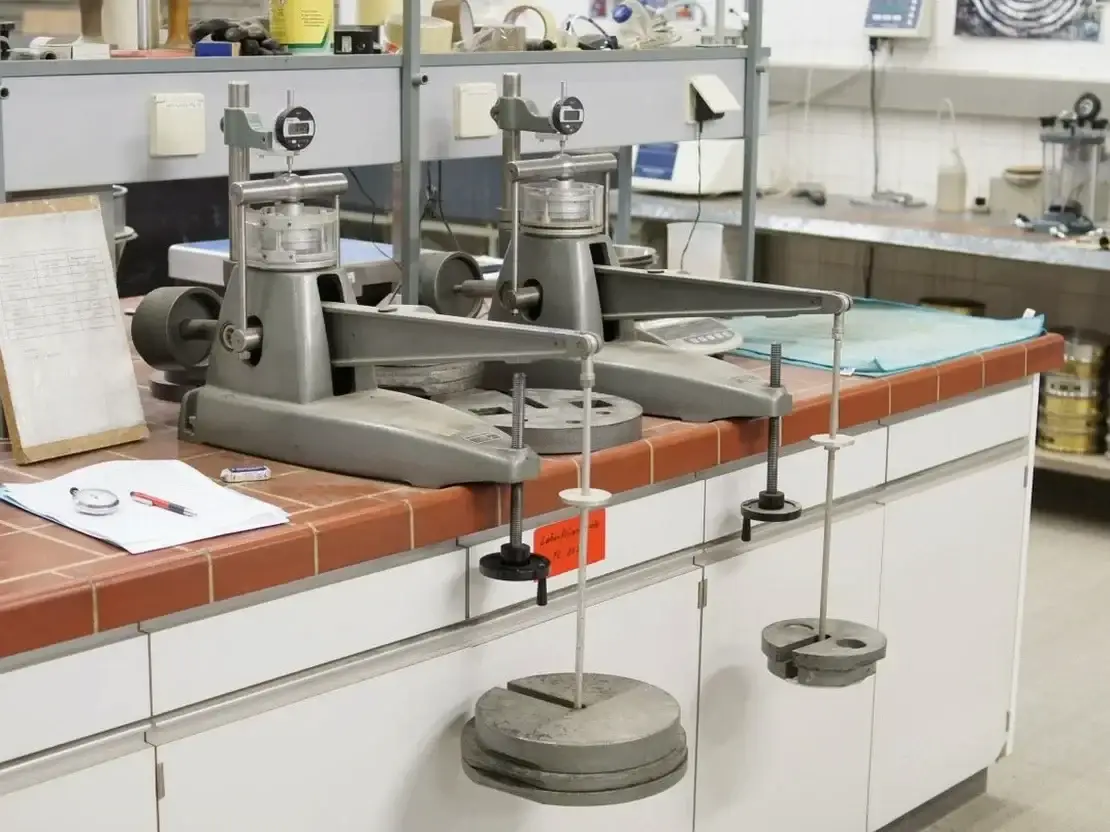
Compliance with applicable standards is non-negotiable in Corona, where the California Building Code (CBC), based on the International Building Code, governs geotechnical investigations. The CBC adopts ASTM International and AASHTO test methods by reference, mandating specific procedures for everything from Atterberg limits determination (ASTM D4318) to oedometer consolidation test protocols (ASTM D2435). The City of Corona's Public Works Department and the Riverside County Building & Safety Division often require laboratory reports stamped by a licensed geotechnical engineer, with results directly tied to design parameters like allowable bearing capacity and lateral earth pressure. For transportation projects, Caltrans specifications influence Proctor test (Standard or Modified) compaction requirements, typically referencing ASTM D698 or D1557 for subgrade and backfill materials. These regulatory frameworks ensure that laboratory data is legally defensible and technically reproducible.
The types of projects that demand this laboratory testing are diverse. Residential developments on hillside lots require consolidation and direct shear tests to assess cut-and-fill slope stability. Commercial and industrial buildings in the Corona Valley rely on grain size analysis and Proctor tests for engineered fill placement and foundation support on potentially expansive clays. Infrastructure projects, including stormwater detention basins and roadway widenings along Ontario Avenue or Green River Road, need permeability testing for drainage design and soil classification for borrow source evaluation. Even smaller-scale retaining walls and pool constructions benefit from basic index testing to confirm contractor assumptions about site soils. In every case, the laboratory transforms disturbed and undisturbed samples into actionable engineering properties.
Available services
Atterberg limits
→ Ver detalleGrain size analysis (sieve + hydrometer)
→ Ver detalleLaboratory permeability test (falling/constant head)
→ Ver detalleOedometer consolidation test
→ Ver detalleProctor test (Standard or Modified)
→ Ver detalleResidual soil characterization
→ Ver detalleSoil classification (USCS/AASHTO)
→ Ver detalleSoil mechanics study
→ Ver detalleQuick answers
What is the typical turnaround time for a complete geotechnical laboratory testing package in Corona?
Turnaround depends on the test suite complexity and current workload. Basic index tests like moisture content and Atterberg limits can be completed within 3-5 business days. Consolidation tests requiring incremental loading over 24-48 hours, plus data reduction, may take one to two weeks. Expedited services are often available for time-sensitive projects, but scheduling early in the investigation phase is always recommended.
How are soil samples typically collected and handled for laboratory testing in Corona?
Samples are obtained from geotechnical borings using standard penetration test (SPT) split spoons, Shelby tubes, or hand-auger equipment. Disturbed samples are sealed in plastic bags, while undisturbed samples in thin-walled tubes are capped with wax or plastic to preserve moisture and structure. Chain-of-custody procedures and immediate transportation to the laboratory in coolers help maintain sample integrity, especially for sensitive clays.
Does local experience matter when selecting a geotechnical laboratory for a Corona project?
Absolutely. Laboratories familiar with Corona's specific geology understand the typical behavior of local alluvial deposits, weathered granite, and potentially expansive claystone. This experience aids in recognizing anomalous results, selecting appropriate test methods for problematic soils, and correlating laboratory data with field observations from similar nearby projects, ultimately producing more reliable design recommendations.
What laboratory tests are most critical for evaluating slope stability in Corona's hillside areas?
For slope stability, effective shear strength parameters from consolidated-drained direct shear or triaxial tests are essential. Residual shear strength testing is often crucial for evaluating pre-existing landslide surfaces in weathered bedrock. Additionally, Atterberg limits and grain size analysis help classify fine-grained soils and assess their drained versus undrained behavior under anticipated loading conditions.